
Post
6 Ways Agentic AI Reduces Manual Workload Across Loan Operations
Construction Lending
Learn More


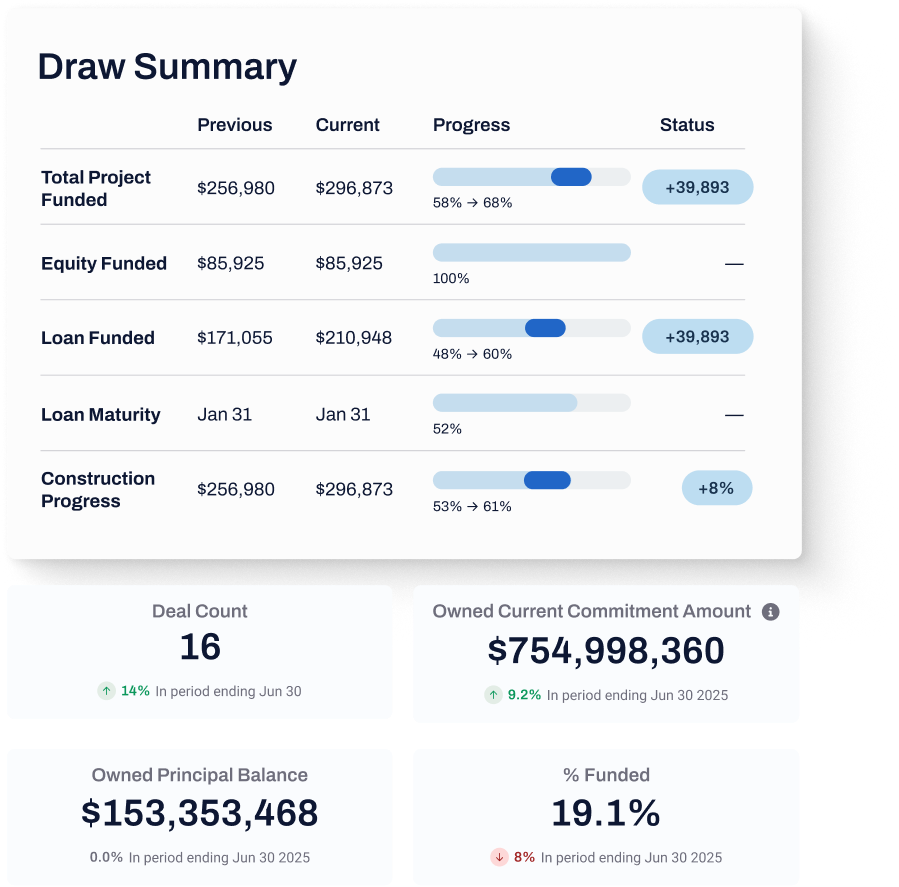
This Winter Release introduces new Construction Loan Administration enhancements that help lenders improve consistency, gain clearer insight into draw performance, and reduce manual effort across draw operations. With AI-powered automation and expanded operational controls, these updates are designed to make day-to-day work easier while maintaining confidence and compliance.
The AI Draw Agent is an optional add-on built directly within CLA to review draws against each lender’s policies and procedures, automatically validating documentation, budgets, and checklist requirements. By handling repetitive review tasks and surfacing exceptions for review, the agent reduces manual effort and draw turn times while keeping your team firmly in control of final decisions. Learn More.
Draw Operations Benchmarking gives lenders visibility into how their draw turnaround times compare to peer institutions and Built platform averages. By filtering results by portfolio size, geography, or property type, teams can identify inefficiencies, track performance trends over time, and uncover opportunities to accelerate funding across their construction portfolio. Learn More.
Unlimited capacity for customizable loan flags gives teams more control to organize and track loans in the way that best supports their operational needs. Flags can be used to highlight follow-ups, track internal watchouts, or capture key metadata your team relies on. This makes it easier to maintain data consistency and support cleaner workflows within a single platform. Learn More.
Automated Cost Type Classification expands existing AI capabilities by scanning budgets and automatically categorizing cost types, such as hard and soft costs, while preserving original budget descriptions. This reduces manual data entry, improves consistency across budgets, and supports more accurate downstream reporting and analysis. Learn More.

